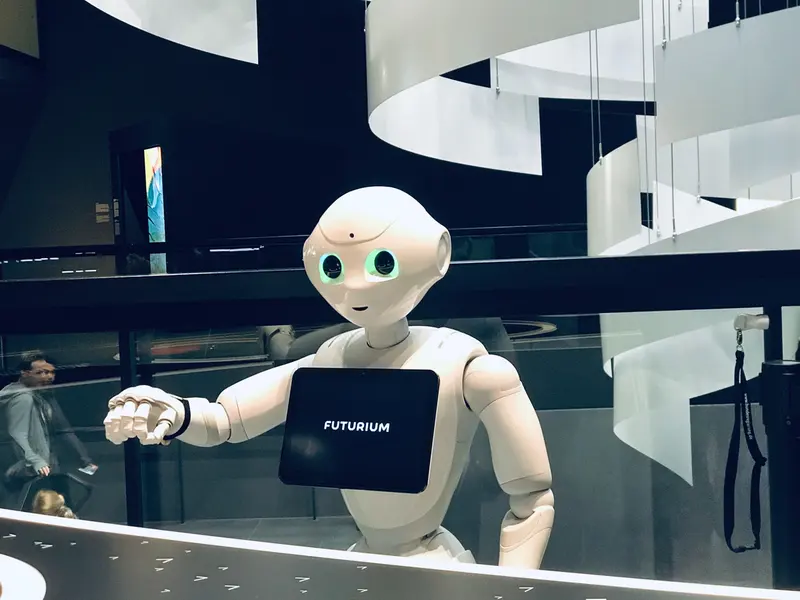
Technology is used in every area of life to make people's lives easier. In this context, technology offers a variety of solutions in different fields. Nowadays robotics is widely used to make people's lives easier and to bring solutions to a range of problems. This raises an important question for us: what exactly is a robot? A robot must have 4 parts:
Sensors: A robot can perceive information about its surroundings through sensors.
Electronic circuits: A robot can collect and process information through electronic circuits.
Program: A robot makes decisions through a program.
Mechanical mechanism: A robot can carry out the necessary movements according to the decisions made.
Robots are classified by their purpose of use. By purpose, robots are divided into two classes: 1- Industrial robots 2- Service robots
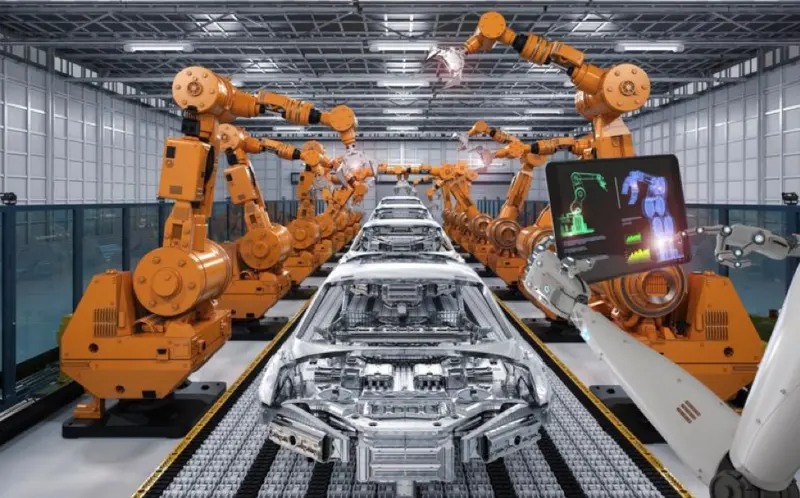
Industrial robots According to the course book Johdatus robotiikkaan (Introduction to Robotics; TIEP1830, 2020), industrial robots are programmable, multi-purpose mechanical devices. Their most common uses are typically welding, painting or assembly, and their operating environment is a factory or a similar production facility. Industrial robots are usually used for tasks in industrial production that are considered too heavy or dangerous for people, that involve endless tedious repetition, or that are otherwise too unpleasant.
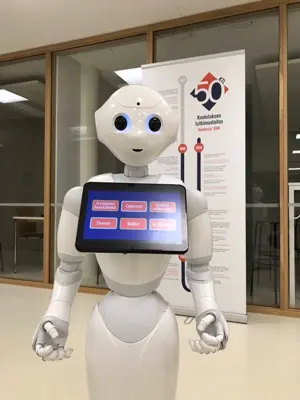
Service robots In practice, all robots that work outside manufacturing industry count as service robots (Grönlund M., et al., 2019). Service robots are widely used in everyday life, which is why they are very popular. For example, household robots, teaching robots and medical robots are service robots. Service robots are used extensively in social and health care, where they support the work of staff, help with rehabilitation and prostheses, and provide personal physical, cognitive or social assistance. Rehabilitation robots are good examples: robotic prostheses follow the movements of the hand, and exoskeletons enable patients to move around more independently.
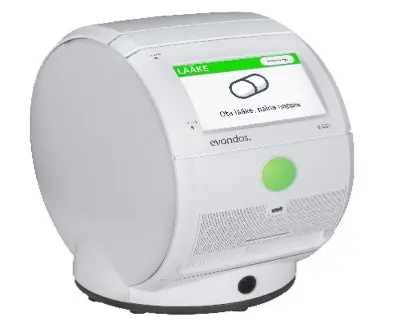
Another example is the Evondos medication dispensing robot, which reminds the client to always take their medicine at the right time and in the right dose. A robot can also be used, for example, to move a patient from a bed to a wheelchair.
Video: An example of rehabilitation robots In conclusion, although there are many ethical questions, the use of robotics in everyday life keeps improving. As artificial intelligence develops, robots may also interact more with people in the future. Sources: Grönlund K., Kaunissaari K., Katriina K., 2019. Palvelurobotiikan käyttö palvelumuotoilussa Suomessa. https://medium.com/@sdnfinland/palvelurobotiikan-k%C3%A4ytt%C3%B6-palvelumuotoilussa-suomessa-e50bb61e7e5d TIEP1830 Johdatus Robotiikkaan course book, 2020. Jyu-moodle learning environment website.