
Because technology is developing so quickly, using it in learning processes is a widely discussed topic. Researchers and teachers want to find out how technology can be used in practice in teaching. Rapid technological development affects teaching and the learning environment in several ways. At present, it is used in teaching as a teaching tool for teachers, as an assistant for students and as a learning environment in its own right. This text sets out to explore:
How is artificial intelligence used in teaching and learning processes?
What challenges can there be in using artificial intelligence?

Artificial intelligence is a system or program used to make tasks easier, simpler and automatic. With AI we combine information from different devices or resources. AI is used to guide students, to carry out assessment automatically, to give feedback automatically and to personalise learning environments. AI can perform such tasks using the data collected from the learning environment. For example, the data collected from the learning environment can show that a student has not completed their assignments. The AI then sends a message about the situation and sets up automatic reminders.
AI is used to guide students, to carry out assessment automatically, to give feedback automatically and to personalise learning environments.
AI is used to make studies more predictable. Using the data collected from the learning environment, it can steer students towards suitable courses. Students can see how they are doing and what they know. This is where the features of the learning environment become important.
The use of AI in learning analytics is still at an early stage. Researchers are defining what kind of data is needed in order to use AI in learning analytics. On that basis, an important question is what data we can actually get from the learning environment. For example, some higher education institutions develop their own learning environment and then get the kind of data they want from it. Learning robots are another area where AI is used, and there is a lot of experience around the world. Learning robots are used, for example, in language learning: students chat with the robot, the robot asks questions, and so on. Robots are also used as a study companion or a tutor.
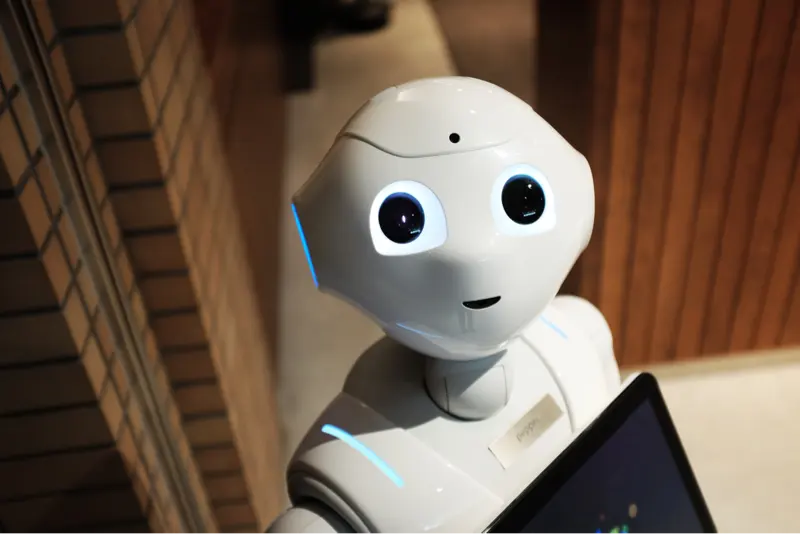
Robots can help students when teachers do not have enough time. For example, robots can help students with reading or writing, so class time can be used more sensibly. AI also comes with many kinds of challenges. Existing learning environments and tools do not necessarily support the technology, and it is difficult to combine learning-related data. In practice, current systems do not support automatic data collection, and data protection legislation restricts the profiling of data. Using AI always requires permission to use the data collected. For this reason it is hard to analyse the data and make decisions when not enough data has been collected. Another challenge is ethics, which has been discussed continuously. For example, is it right for AI to make decisions on behalf of a teacher or a student? Students and teachers should make the decisions, although AI can support them. The last challenge concerns learning robots: they are still an expensive technology and therefore cannot be used widely. In conclusion, although using AI in teaching involves many challenges, it remains a much-discussed and popular topic. AI is used in teaching as an assistant for teachers and students. It is used to guide students, to carry out assessment automatically, to give feedback automatically and to personalise learning environments. On the other hand, it can be said that its use in learning analytics is still at an early stage. One challenge is that robots are still an expensive technology. As technology develops quickly, it keeps getting cheaper, so the use of AI in teaching may become more widespread in the future. Another challenge is that current learning environments do not yet support AI or automatic data collection. At this stage, it is important to develop smart learning environments.